
Nội dung chính
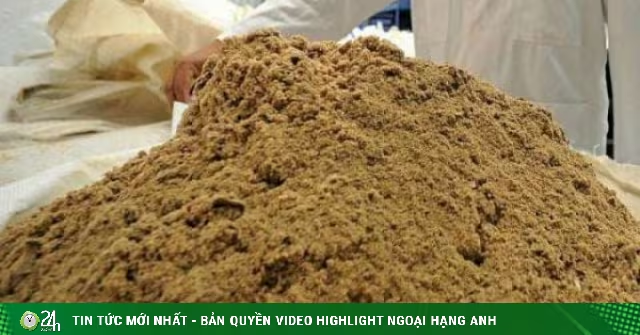
Vietnam’s fish meal export hits $300 million in 2025 – a signal of massive untapped potential
At the 2025 Annual Review Conference of the Department of Fisheries and Aquaculture (Ministry of Agriculture and Rural Development), Mr. Nguyễn Hoài Nam, Secretary‑General of the Vietnam Association of Seafood Processing and Export (VASEP), announced that Vietnam’s fish‑meal export value reached roughly USD 300 million in 2025. The figure only reflects overseas sales and excludes the domestic market, underscoring a still‑growing opportunity for this high‑protein by‑product.
Thị trường bột cá toàn cầu: Trung Quốc là người mua lớn nhất, Peru là nhà sản xuất hàng đầu
World‑wide demand for fish meal continues to rise. According to the Food and Agriculture Organization (FAO), Peru supplies about 20 % of global production, mainly from anchovy processing. China accounts for roughly 90 % of global imports, making it the single biggest customer for Vietnam’s export.
Tiềm năng nội địa: Sản lượng thủy sản và nhu cầu thực phẩm chăn nuôi đang bùng nổ
In 2025, Vietnam’s total fisheries production hit 9.95 million tons – a 3 % increase over 2024 – with aquaculture contributing 6.1 million tons (up 5.1 %). This surge drives the demand for high‑quality fish meal, which is primarily used as protein‑rich feed for livestock, poultry, aquaculture species and even pets. Additionally, fish meal serves as an organic fertilizer that enhances soil fertility.
Sản lượng thức ăn thủy sản
The country produced 5.39 million tons of aquafeed in 2025 (1.4 Mt for shrimp, 2.02 Mt for pangasius, 1.97 Mt for other species), creating a solid downstream market for fish meal.
Doanh nghiệp Việt Nam biến phế phẩm thành “vàng xanh”
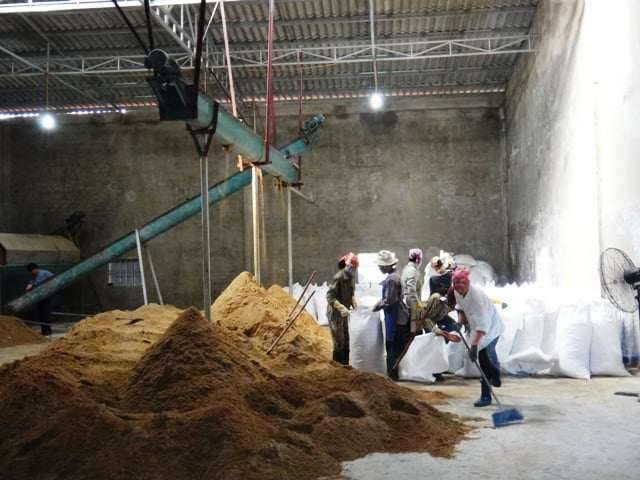
Phúc Lộc Co., Ltd. (Ho Chi Minh City) buys around 60 tons of fish waste daily and turns it into 4,000‑5,000 tons of fish meal per year, generating VND 72‑90 billion in revenue. The company aims to raise protein content to 64 % and cut national imports by 140,000 tons annually, provided it receives capital and technology support.
Công ty TNHH Tứ Hải processes shrimp heads that once sold for a few thousand VND/kg into dried products exported to Japan at US$10 per kg, earning VND 10‑12 billion yearly. The firm sees a growing demand but lacks sufficient raw material, highlighting a gap for new entrants.
The Southern Institute of Marine Research (SIMR) extracts chitosan from shrimp shells for medical, agricultural and biodegradable‑packaging applications, with prices up to US$1,000 per kg.
Dự báo giá trị phụ phẩm 2026‑2030
- Phế phẩm tôm: 650,000 tons, value US$80‑100 million.
- Phế phẩm cá tra: 1.3 million tons, value >US$500 million.
Chính sách và hướng đi: Từ “rác thải” tới chuỗi giá trị kinh tế tuần hoàn
Currently, fish‑meal export revenue is recorded under the livestock‑feed code, not under the fisheries sector. VASEP has urged the Department of Fisheries to request the Customs Department to re‑classify fish meal under the fisheries export code (see Circular No. 11/2023/TT‑BT), which would improve statistical visibility and attract sector‑specific incentives.
According to Prof. Phạm Quốc Huy, Director of SIMR, turning waste into resource requires a dedicated industrial framework, green credit lines and tax incentives. When government, academia and businesses align, “what was once waste becomes green gold,” fostering a resilient blue‑economy.
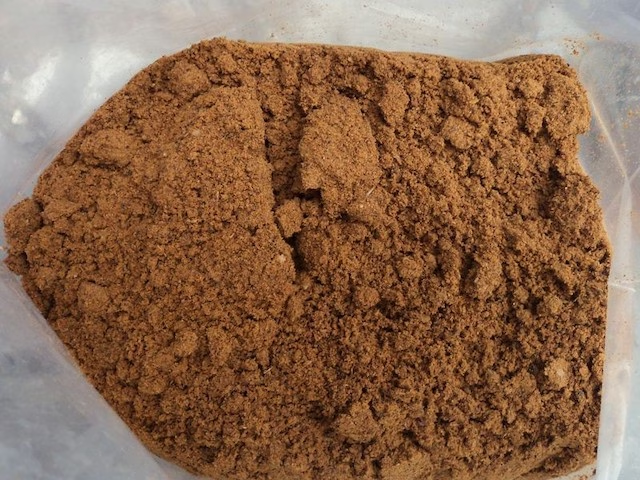
Với nguồn nguyên liệu phong phú, chính sách hỗ trợ đúng hướng và mô hình kinh tế tuần hoàn, Việt Nam có thể nâng tầm vị thế “điểm sáng” của ngành thủy sản trên bản đồ thế giới.